Why Do My Breasts Hurt During Perimenopause and Menopause?
4 minute read
Summary
Breast pain (mastalgia) commonly affects women during perimenopause and menopause due to erratic hormone fluctuations, particularly changes in estrogen and progesterone. While most cases are benign and can be managed with supportive bras, dietary adjustments, or modifications to menopausal hormone therapy (MHT), new lumps, persistent localized pain, or skin changes require prompt medical evaluation to rule out serious conditions. Non-hormonal causes, medication side effects, and structural breast changes may also contribute to symptoms.
Is Breast Pain a Normal Symptom of Perimenopause and Menopause?
Yes, breast pain is common during perimenopause and menopause, affecting up to 70 percent of women. It is primarily driven by the erratic hormone fluctuations characteristic of perimenopause. While the vast majority of cases are benign, any new, persistent, or localized pain warrants a thorough medical evaluation to rule out other causes.
Understanding the Causes: Hormonal vs. Non-Hormonal
Breast pain during midlife can stem from multiple sources. Understanding the distinction between hormonal and non-hormonal causes is essential for appropriate management.
Hormonal Causes (Perimenopause/Menopause)
Estrogen highs and lows stimulate breast tissue and duct growth. During perimenopause, estrogen levels fluctuate wildly—sometimes spiking higher than in your reproductive years—causing breast tissue to swell and become tender.
Progesterone decline can exacerbate tenderness. As ovulation becomes irregular, progesterone production declines, leaving estrogen unopposed and intensifying breast sensitivity.
HRT (Hormone Replacement Therapy) in either perimenopause or menopause can also contribute to mastalgia.
Non-Hormonal Causes (Post-Menopause & General)
Involution and Tissue Change. As menopause progresses, breast tissue undergoes involution—a process where glandular tissue is replaced by fat. This structural change can produce non-cyclical pain unrelated to hormone cycles.
Extramammary Pain. Musculoskeletal issues such as costochondritis (inflammation of chest wall cartilage) or injury/strain of the pectoral muscles can radiate to the breast, mimicking true breast pain.
Medication Side Effects. Certain antidepressants, particularly SSRIs, along with MHT, SERMS (selective estrogen receptor modulators), Aromatase Inhibitors and some blood pressure medications acknowledge that breast pain can be a potential side effect.
The Red Flags: When to Worry and Why Your Doctor Should Know
While most menopausal breast pain is benign, specific warning signs require immediate medical evaluation. Contact your healthcare provider if you experience any of the following:
Pain that is localized to a single spot and does not change.
Discovery of a new lump, thickening, or hardening in the breast tissue or armpit area.
Any skin change, such as dimpling, puckering, redness, or a texture resembling an orange peel.
Nipple discharge, particularly if it is bloody, clear, or occurs spontaneously from a single duct.
Pain that persists despite standard relief measures and significantly interferes with your daily activities or sleep quality.
These symptoms do not automatically indicate cancer, but they do mean you should get a comprehensive clinical breast exam from a doctor.
Effective Strategies That Can Help
Once serious causes have been ruled out, a combination of lifestyle modifications and targeted interventions can provide significant relief from breast pain.
1. Optimal Bra Support
Wearing a properly fitted, supportive bra throughout the day minimizes ligament movement and reduces pain. Wearing a soft, non-underwire sports bra at night can provide gentle support.
2. Caffeine and Fat Reduction
Limiting caffeine (in coffee, tea, chocolate, and soda) and reducing overall dietary fat intake can decrease the severity of breast pain.
3. Topical or Oral Pain Relievers
Over-the-counter anti-inflammatory gels containing diclofenac or ibuprofen, applied directly to the painful area, can provide localized relief with minimal systemic side effects. Oral medications containing these pain relievers are also an option.
4. Vitamin and Supplement Review
Discuss with your menopause-expert physician whether vitamin E, magnesium, or others are appropriate for you. Evidence for these supplements is mixed, but some women report benefit with minimal risk.
5. Hormone Replacement Therapy (MHT) Adjustment
If you're taking MHT and experiencing breast pain, your doctor may adjust your dosage or formulation. Conversely, if you're not on MHT and hormonal fluctuations are severe, estradiol pills, patches, or gels may help stabilize symptoms.
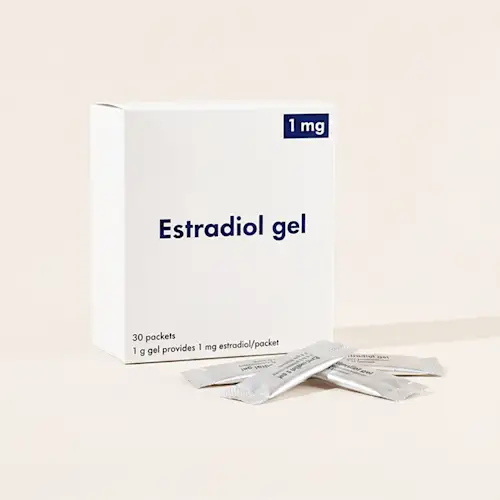
Estradiol Gel
$69.99 /mo
Conclusion
Perimenopause and Menopause-related breast pain is typically benign, but it serves as an important signal that your body is undergoing significant hormonal changes. The key to effective management lies in first ruling out serious underlying causes through proper medical evaluation, then making certain lifestyle modifications and, when appropriate, medical interventions. Understanding that Hormone Replacement Therapy (MHT) can have paradoxical effects—causing pain in some women while relieving it in others—underscores the importance of individualized care. You deserve answers, reassurance, and a personalized plan that addresses your unique symptom profile and medical history.
Talk to your doctor. Let your menopause-expert physician at Alloy know if you’re experiencing breast pain or any other symptoms. You should also talk to your regular GP or OB-GYN.
Frequently Asked Questions
Does hormone replacement therapy cause or treat breast pain?
Hormone Replacement Therapy (HRT) can have paradoxical effects on breast pain depending on the individual. In some cases, starting MHT can contribute to mastalgia as a side effect. However, for women experiencing severe hormonal fluctuations during perimenopause, using estradiol in forms such as pills, patches, or gels may actually help stabilize symptoms and provide relief. Because of these varying effects, medical providers may need to adjust the dosage or formulation to find the right balance for each person.
How does the structural change of breast tissue during menopause lead to pain?
As a woman moves through menopause, the breasts undergo a process called involution. During this transition, the glandular tissue is gradually replaced by fat. These structural changes can result in non-cyclical pain that is unrelated to the usual hormonal cycles. This is considered a non-hormonal cause of breast pain, distinct from the tenderness driven by estrogen and progesterone fluctuations.
What specific breast changes indicate a need for immediate medical evaluation?
While breast pain in midlife is often benign, certain "red flag" symptoms require a clinical breast exam to rule out serious issues. These include pain that is localized to a single spot without changing, the discovery of a new lump or thickening in the breast or armpit, and skin changes like dimpling or a texture similar to an orange peel. Additionally, spontaneous nipple discharge—especially if it is clear or bloody—or pain that persists despite relief measures should be discussed with a healthcare provider.
Sources: https://my.clevelandclinic.org/health/diseases/15469-breast-pain-mastalgia
https://www.breastcancer.org/benign-breast-conditions/mastalgia
https://www.uchealth.org/diseases-conditions/mastalgia-breast-pain/
Subscribe
Go ahead, you deserve to
feel fantastic
By subscribing you agree to our Terms of Service & Privacy Policy.